
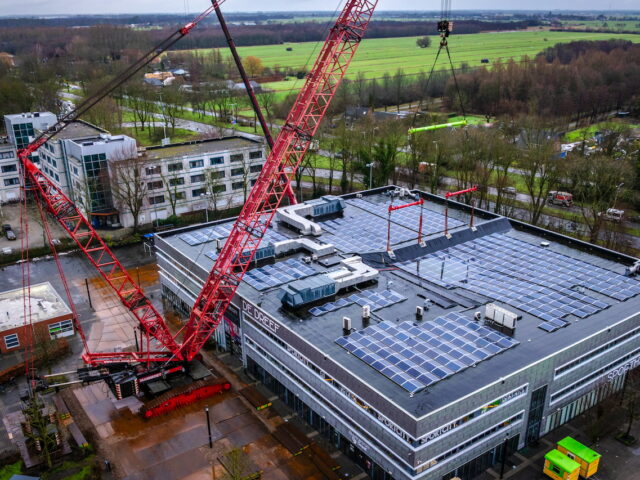
Not all snow is the same. Fresh, dry snow is very different from snow that has been lying for several days and turns wet. The greatest risk occurs when temperatures hover around freezing for days. Last winter, snow depths often reached 30 centimetres or more. If that snow remains in place for several days, the situation can become genuinely dangerous, especially when it starts to thaw and meltwater collects at the lowest point.
Of course, building regulations exist. In the Netherlands, flat roofs are calculated using a basic load of 56 to 70 kg/m², taking snow into account. But the actual load can quickly rise far above the minimum statutory standard due to snow accumulation, solar panels installed at a later stage or air-conditioning units. That is often when things go wrong.
In Utrecht, the first incident occurred at Hal22, a low-rise sports hall with padel courts. One day later, a similar disaster happened in the Overvecht district of Utrecht, where the roof of sports centre De Dreef collapsed.
This brick building, owned by the Municipality of Utrecht, has three storeys and houses a school as well as a fitness centre on the top floor. Hal22 could no longer be saved and had to be demolished. At De Dreef, the heaviest possible equipment had to be deployed to prevent further damage.
Heavy equipment
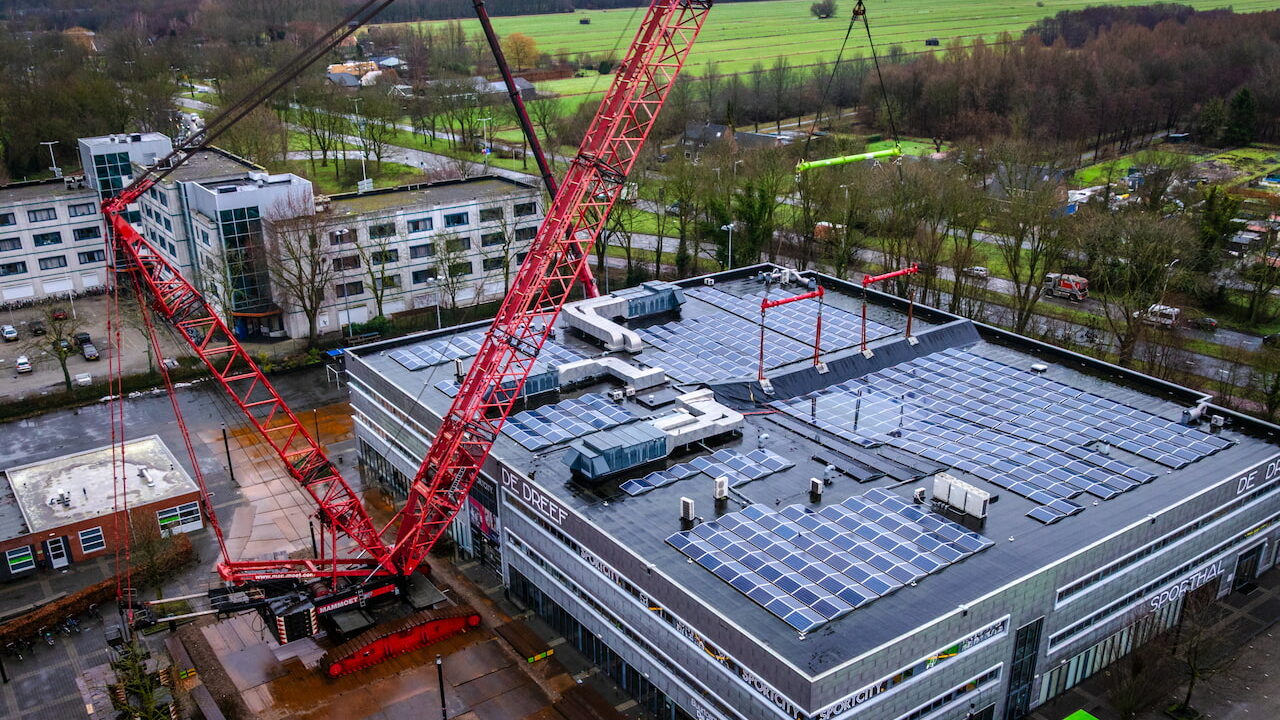
On the top floor of De Dreef, the central roof truss and adjoining side supports had sagged over a length of 28 metres. More and more meltwater was also collecting on the roof, so immediate action was required. That could only be done with extremely heavy equipment, which is why Mammoet was brought in.
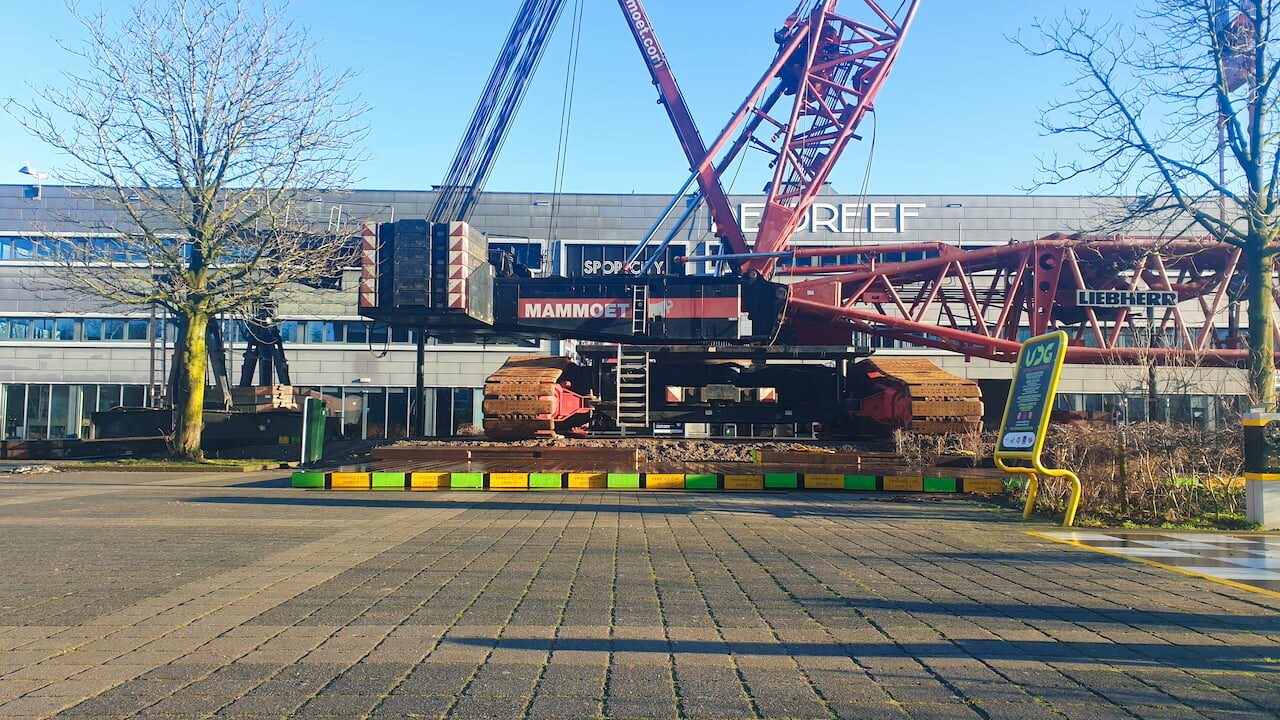
Using an ultra-heavy LR1750 crawler crane, the roof structure was lifted precisely in the middle. This allowed the roof to be supported from the inside with heavy columns. In this way, the building was temporarily stabilised. The final renovation will follow at a later stage.
Setting up a crawler crane of this size is no simple task. The crane alone weighs close to 600 tonnes, not including the ballast weights. The forces exerted on the ground are enormous.
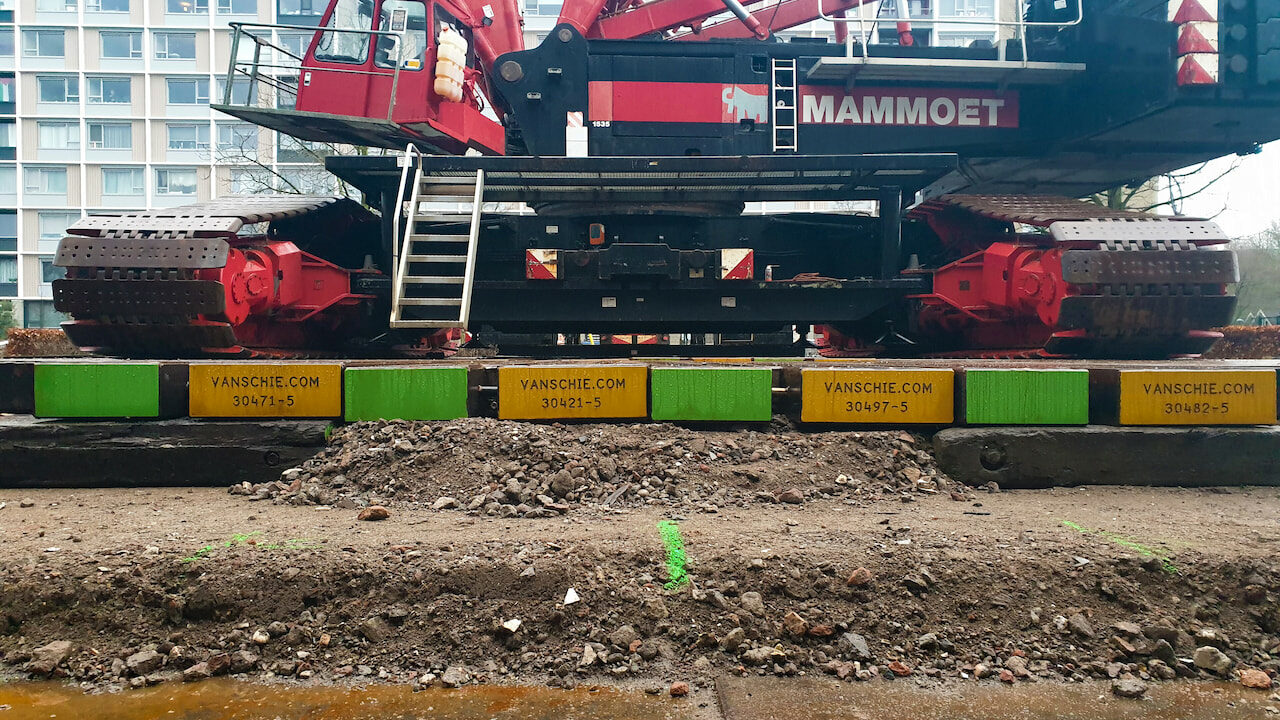
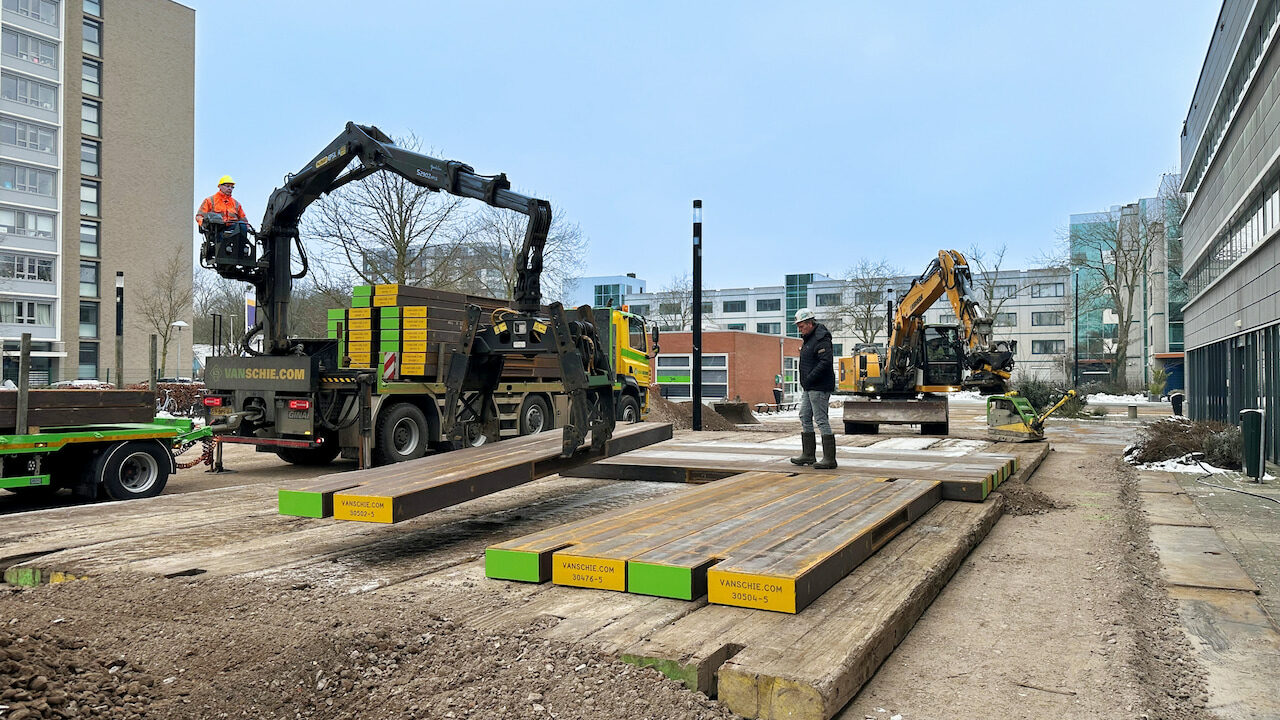
Based on the crane plan, Van Schie built a stable working platform: a set-up area for Mammoet’s crawler crane. The platform consisted of steel road plates, timber mats, a thick layer of mixed granulate and finally the newly developed steel dragline mats, known as load spreaders.
The crane had to be positioned exactly on the centreline of the building. In the photograph, this line is visible as the green paint stripe marked on the granulate.