
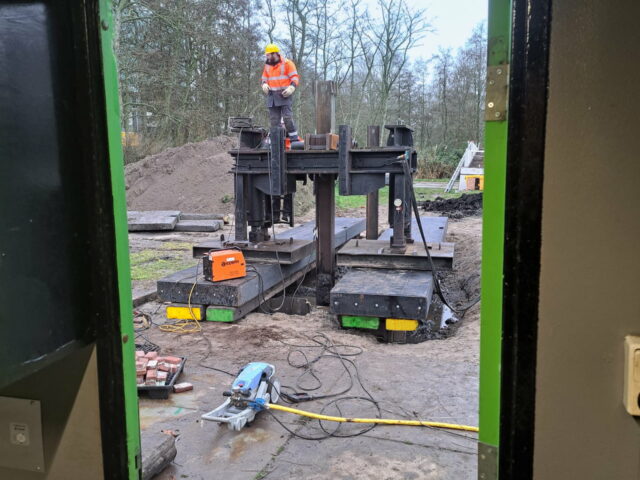
Scientific research at a TU Delft test site was designed to provide more insight.
In the past, wooden piles and concrete piles were commonly used. Over the years, many alternative foundation techniques have been developed. One of these is the screw injection pile. In this test case, the pile in question was a Fundex pile: a steel casing fitted with a loose drilling point, which is screwed into the ground without vibration. Once the correct depth is reached, reinforcement is lowered into the casing and the tube is filled with a concrete mix.
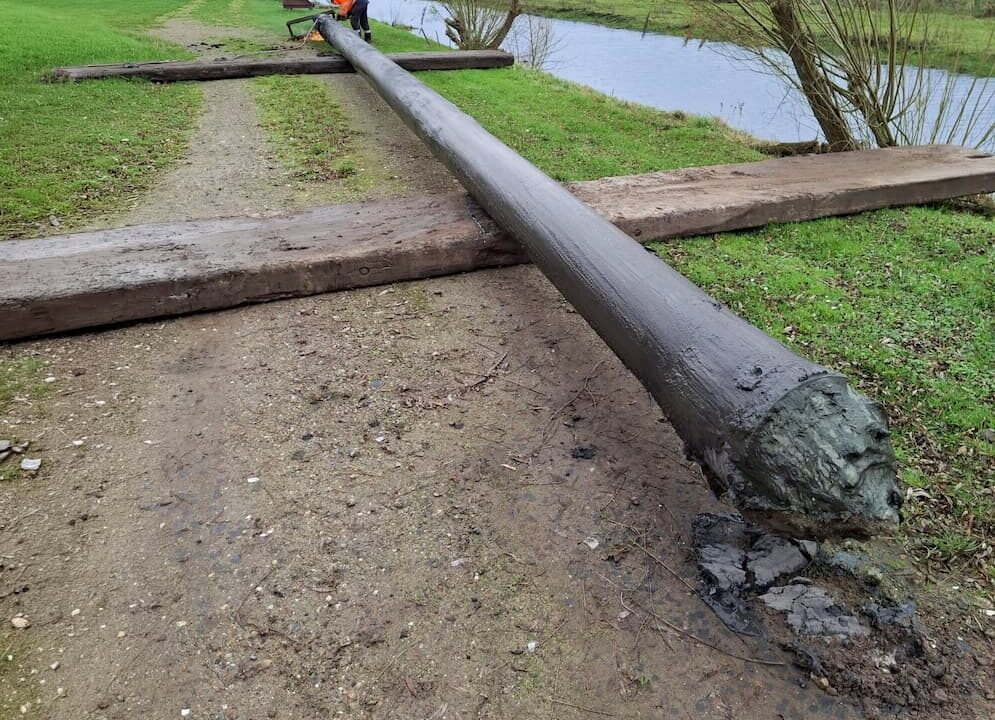
After the concrete has set, the casing is pulled back up and the pile is complete. This type of foundation pile had been installed years earlier at TU Delft at the request of research institute Deltares. Next to it, a Tubex pile had also been installed, using the same concrete mix but with the casing left in place. Both piles were 20 metres long.
Now the time had come to subject the piles to test loads and further research, all carried out in accordance with NEN standards.
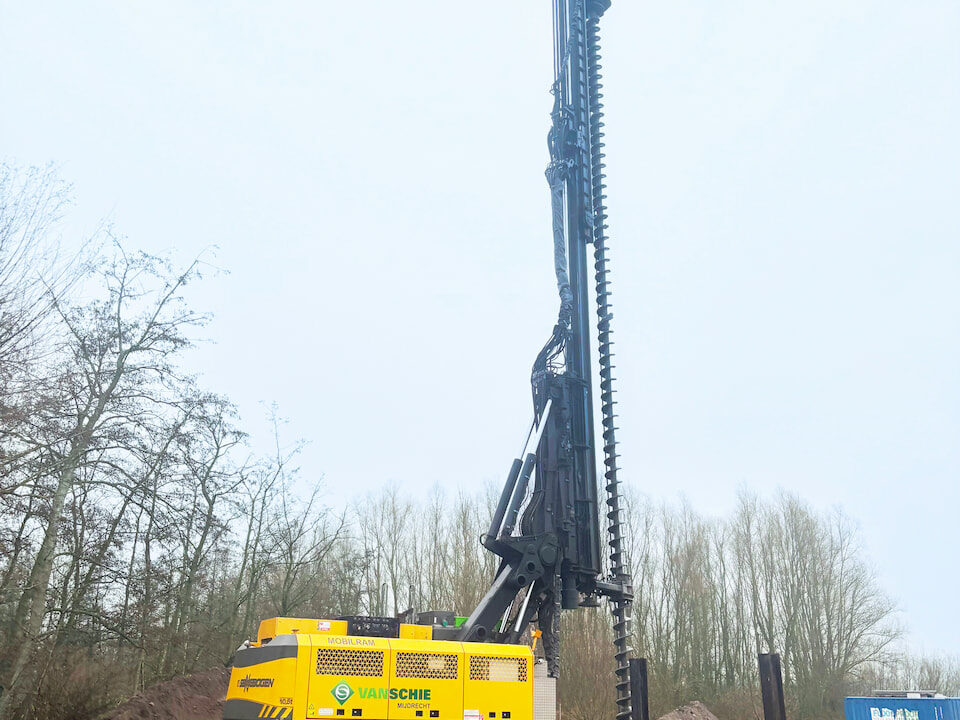
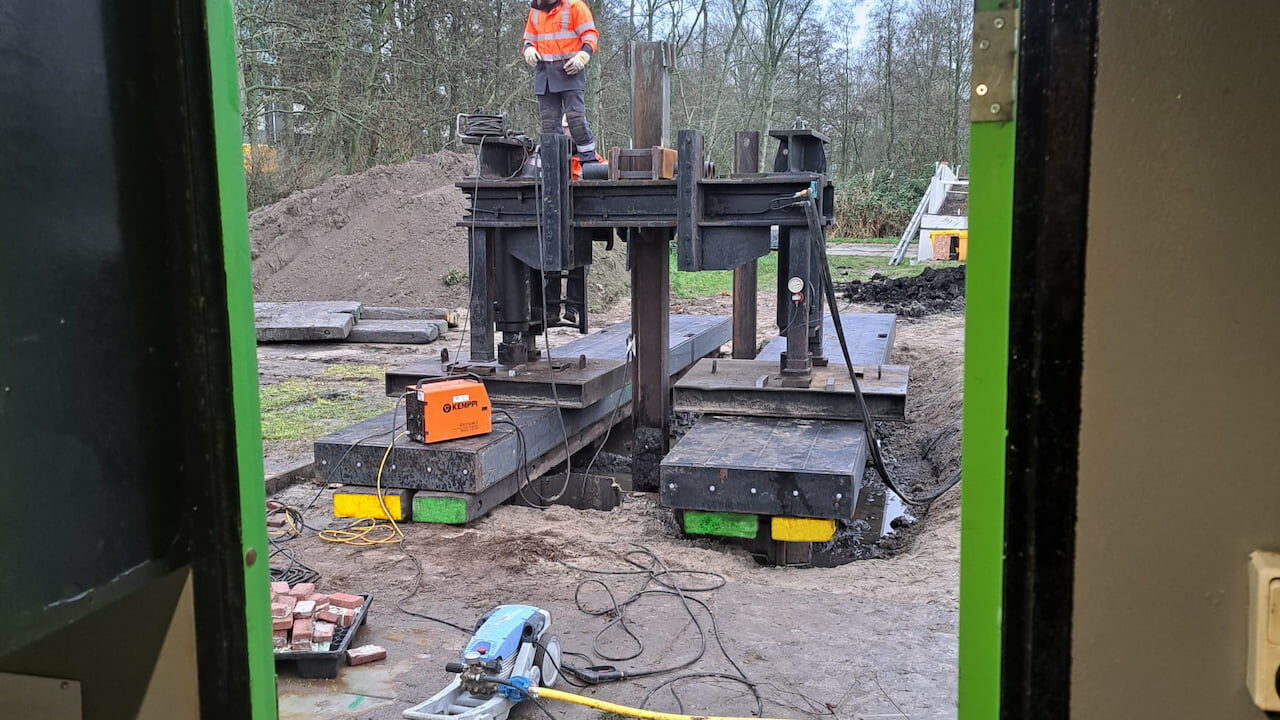
Van Schie was asked to extract the two piles completely vertically from the ground using specialist techniques and the necessary precision. A so-called pulling frame was used for this: an auxiliary construction with hydraulic jacks. This is exactly the kind of work the Mijdrecht-based company has experience in.
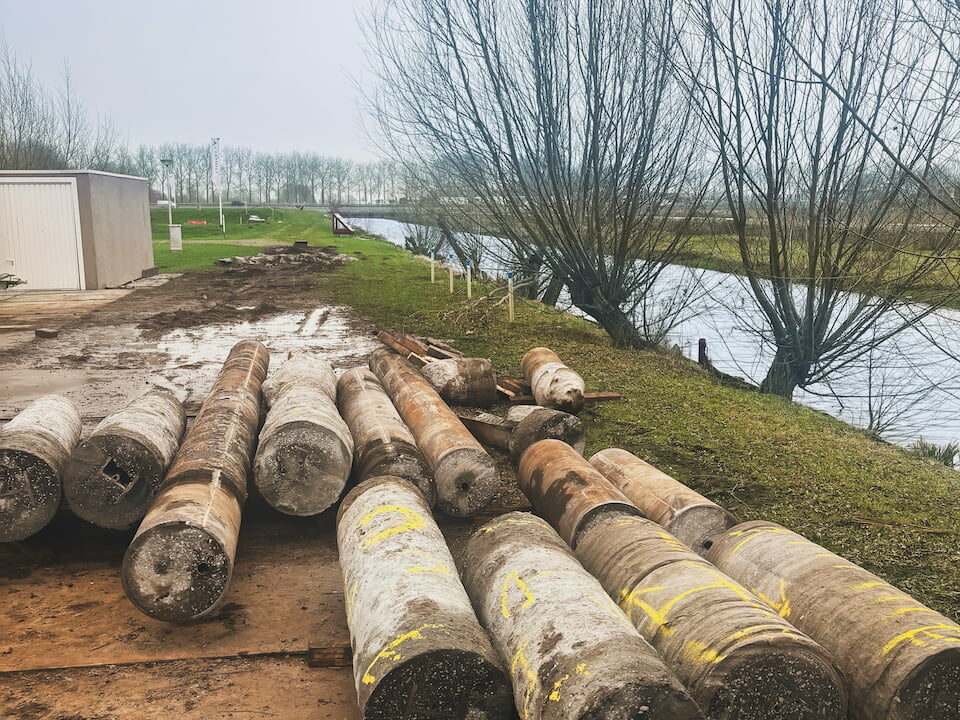
To carry out the job, a sheet pile wall was first installed around the extraction pit and the soil surrounding the pile was partly loosened by drilling. After extraction, sections of the piles were cut into equal pieces of around 1.5 metres and examined in the laboratory.
The project was carried out on behalf of, and in close cooperation with, Funderingstechnieken Verstraeten BV.